
Arena Footing Systems
Ground Stabilization Systems: The Complete Guide to Permanent Mud Prevention and Soil Reinforcement
Performance Footing · September 8, 2026 · 13 min read
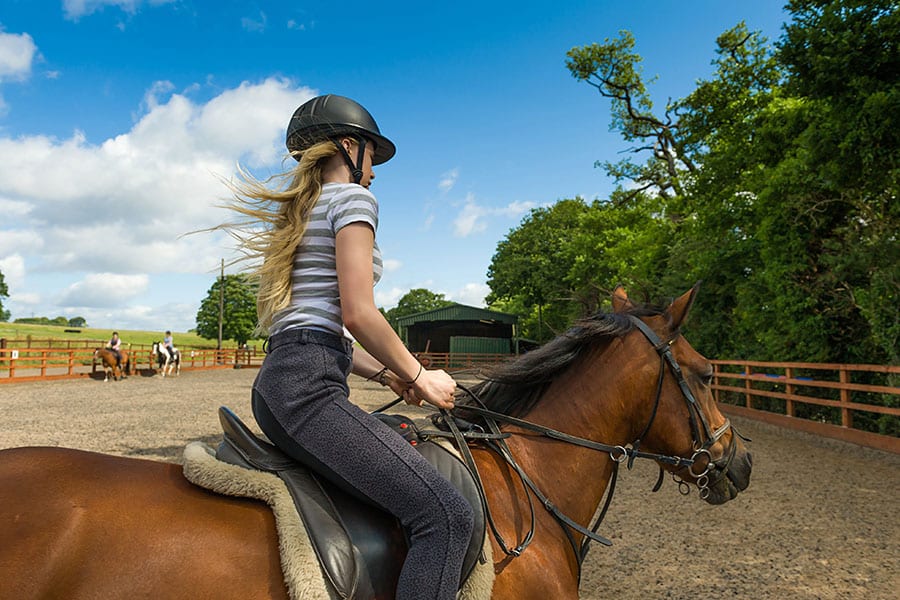
Discover how ground stabilization systems prevent mud, reinforce soil, and create durable surfaces for equestrian, commercial, and residential applications.
Unstabilized high-traffic areas can lose up to 2 inches of topsoil annually through erosion and compaction—transforming driveways, pens, paddocks, pathways, and parking areas into seasonal mud pits that threaten horse health, damage property, and create ongoing maintenance headaches. Ground stabilization systems solve this problem by creating a load-bearing cellular matrix that confines soil and aggregate, distributing weight across a broader surface area while maintaining permeability for natural drainage. Whether you're managing an equestrian facility, commercial property, or residential landscape, these engineered solutions eliminate mud at its source rather than treating symptoms season after season. Performance Footing products have been installed as ground stabilization systems across diverse climates and soil types globally, developing proven specifications for every application from high-traffic paddocks to vehicle access roads.
What Are Ground Stabilization Systems and How Do They Work?
Ground stabilization systems are engineered structures that create a three-dimensional cellular confinement network within the soil profile. When aggregate or native soil fills these cells, the material becomes laterally confined, dramatically increasing load-bearing capacity while preventing the displacement that causes rutting, erosion, and mud formation.
The science behind this technology draws from geotechnical engineering principles used in highway construction and military applications. According to research published in the Geotextiles and Geomembranes journal, cellular confinement systems can increase the load-bearing capacity of weak soils by 200-400% compared to unconfined aggregate. This occurs because the cell walls prevent lateral movement of infill material under vertical load—the same principle that makes a honeycomb structure stronger than its individual components.
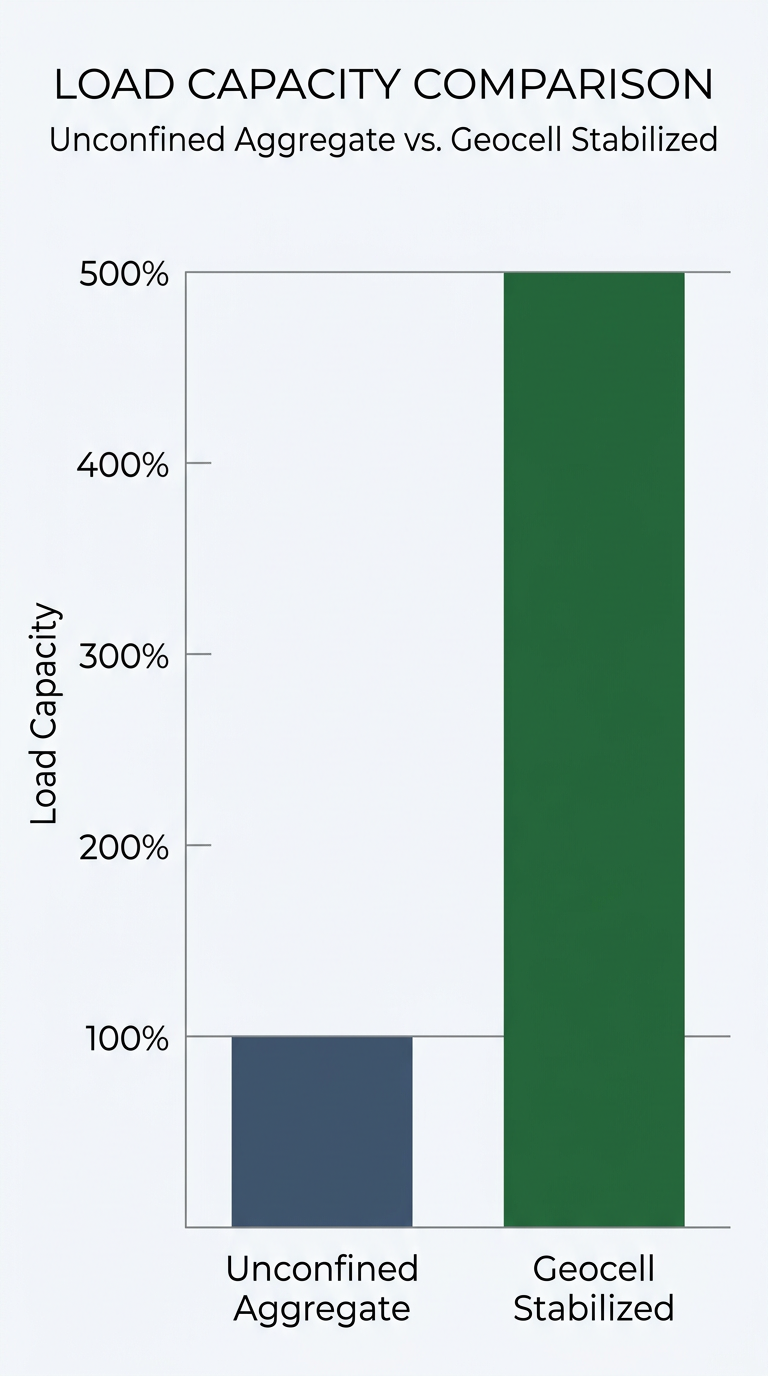
Engineering studies demonstrate a significant increase in soil stability when using cellular confinement over traditional methods.
For equestrian applications, this engineering translates to practical benefits: paddocks that remain firm through spring thaw, sacrifice areas that protect pastures during wet seasons, and walkways that eliminate the ankle-deep mud that causes thrush, scratches, and soft tissue injuries in horses. The permeable structure allows rainwater to infiltrate naturally rather than pooling on the surface, addressing both the symptom (standing water) and the cause (inadequate drainage and soil displacement).
Cellular Confinement vs. Traditional Approaches
Traditional mud management often involves repeated applications of gravel or stone dust using materials that migrate, compact, and eventually sink into saturated soil. Studies note that without confinement, aggregate placed on unstable ground can require replacement every 1-3 years, with each application merely postponing the inevitable return to muddy conditions.
Cellular confinement systems break this cycle by preventing lateral aggregate migration through physical cell walls, distributing point loads across multiple cells to reduce localized compaction, maintaining void space for water infiltration even under repeated traffic, and creating a stable base that doesn't require seasonal replenishment. The BaseCore™ Geocell system exemplifies this approach, using high-density polyethylene (HDPE) panels that expand into a honeycomb grid.
Understanding the Complete Ground Stabilization Stack
Effective ground stabilization isn't a single product—it's a system of layers working together. Understanding this stack helps property owners make informed decisions about site preparation, material selection, and long-term performance expectations.
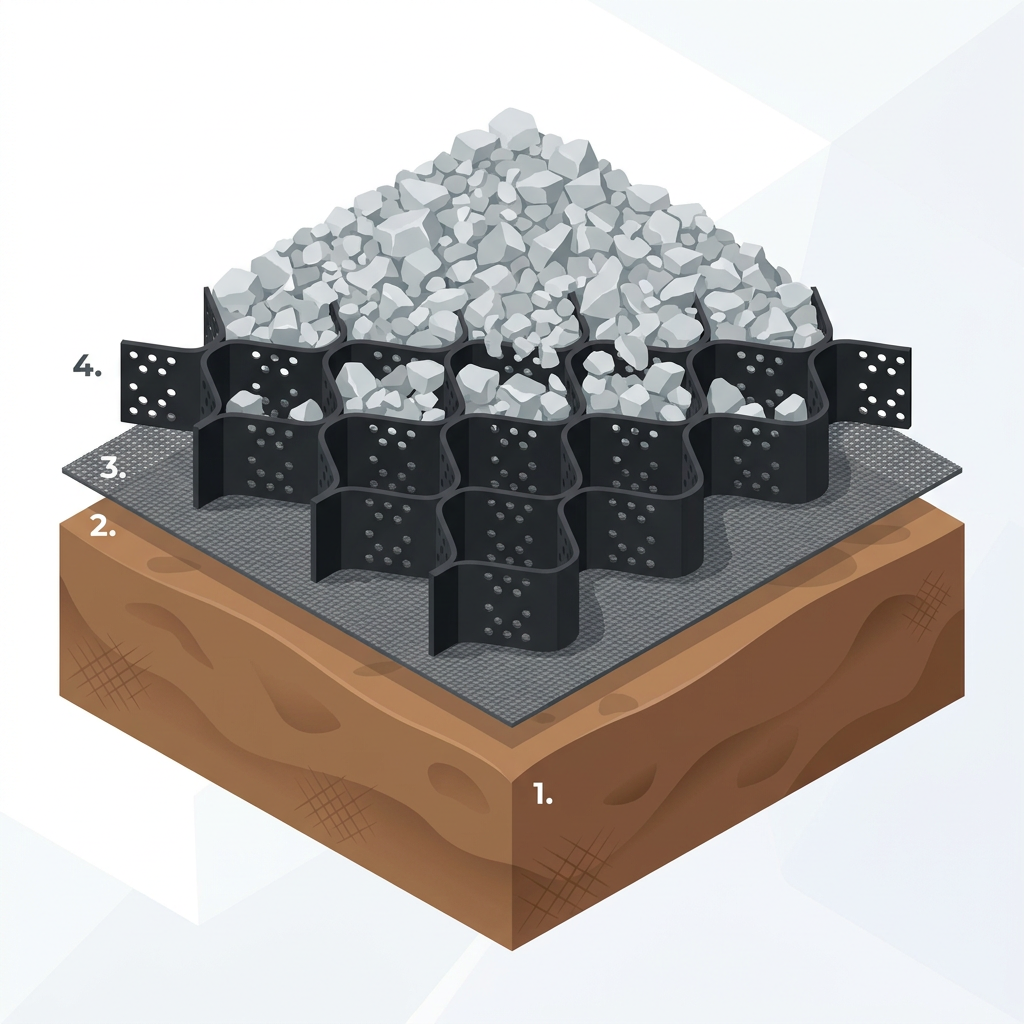
Layer 1: Compacted Subgrade (Bottom)
Every installation begins with the native soil, graded to direct water flow away from high-use areas and compacted to create a stable foundation. Soil type significantly influences system design: clay soils require more aggressive drainage planning than sandy loam, while expansive soils may need additional engineering consideration.
Layer 2: Geotextile Separation Fabric
A geotextile membrane installed directly under the geocell panels serves multiple functions. It prevents fine soil particles from migrating upward into the aggregate (which would eventually clog drainage pathways), while allowing water to pass through into the subgrade below. This separation layer is critical for long-term performance—without it, even well-designed systems can experience reduced permeability over time.
Layer 3: Geocell/Ground Grid Panels
The structural heart of the system, geocell panels typically range from 2-6 inches in depth depending on application, loading, subgrade quality, and drainage conditions. For equestrian paddocks and turnout areas, 3-4 inch depth is typical, though heavier applications or poor subgrade conditions may require 4-6 inch depths for adequate load distribution. Light-traffic walkways and paths often perform well with 2-3 inch geocell depth.
Layer 4: Aggregate Infill
Cell infill varies by application. Crushed angular stone (typically 3/4-inch clean aggregate) provides maximum stability for vehicle traffic and high-wear areas. For equestrian areas where horses spend extended time, a combination of crushed stone topped with a comfort layer of smaller aggregate or sand creates a surface that's both stable and hoof-friendly. Vegetated paddocks and light-use green areas may use smaller angular stone, screenings, native soil amended with topsoil, or grass/turf for surface comfort and erosion control.
Equestrian Applications: Protecting Horses and Property
Mud isn't merely an inconvenience in equestrian settings. It's a documented health hazard. Research from the Royal Veterinary College identifies persistent wet conditions as a primary risk factor for pastern dermatitis (scratches), thrush, and white line disease. Beyond hoof health, horses standing in deep mud experience increased joint stress and are more likely to sustain soft tissue injuries from the uneven, unstable footing.
Paddocks and Turnout Areas
High-traffic zones around gates, water troughs, and feeding areas bear the brunt of hoof traffic, typically becoming the first areas to deteriorate in wet weather. Strategic placement of ground stabilization in these sacrifice zones can preserve the broader paddock while giving horses firm footing where they congregate most.
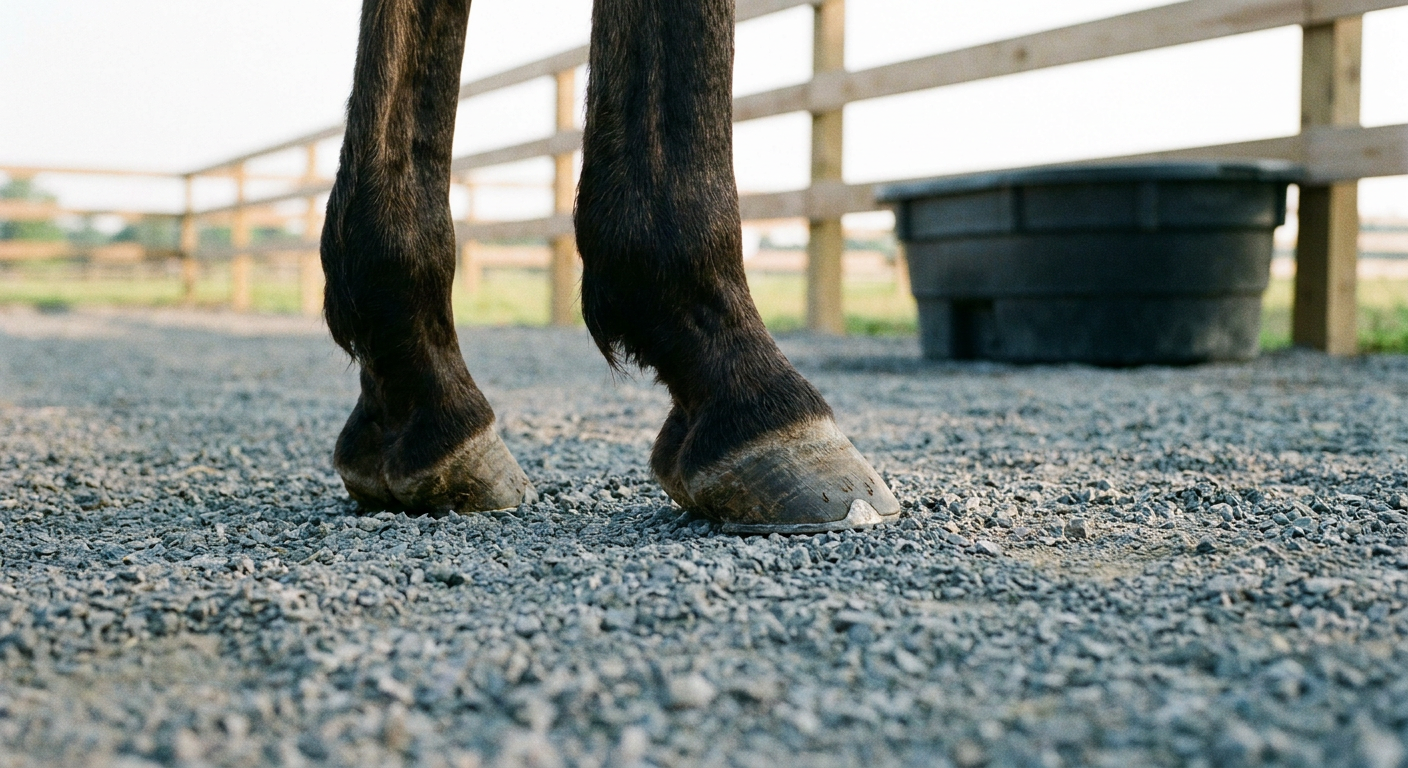
For paddock applications, the typical specification depends on traffic intensity, subgrade quality, and drainage conditions. Standard installations typically use 3-4 inch BaseCore HD geocell panels with geotextile membrane directly underneath, filled with 3/4-inch crushed stone to panel depth, and optionally topped with a 1-inch layer of smaller aggregate or stone dust for surface comfort. High-traffic sacrifice lots or areas with poor subgrade may require 4-6 inch depth for optimal performance.
Barn Aisles and Walkways
Pedestrian and light equine traffic areas typically require less robust specifications, with depth depending on application and loading. For barn aisles, covered walkways, and paths between buildings, 2-3 inch geocell depth often provides adequate stability while minimizing material costs.
PaveCore ground grid panels offer a permeable alternative to traditional concrete or asphalt for these applications, maintaining drainage while creating a firm, non-slip surface that won't crack or heave through freeze-thaw cycles.
Arena Perimeters and Access Points
The transition zone between arena and surrounding areas often receives heavy, concentrated traffic as horses enter and exit. Ground stabilization at these access points prevents the gradual erosion that can undermine arena edges and create trip hazards.
Ready to eliminate mud from your equestrian facility? Performance Footing designs custom mud prevention and ground stabilization systems for paddocks, turnout areas, and high-traffic zones. Request a free consultation to discuss your specific site conditions.
Commercial and Residential Applications
While Performance Footing's expertise centers on equestrian applications, the same ground stabilization principles apply to diverse commercial and residential challenges.
Permeable Parking and Access Roads
Stormwater management regulations increasingly require permeable surfaces for parking areas and access roads. Geocell systems filled with angular aggregate create surfaces capable of supporting vehicle loads while allowing rainwater to infiltrate on-site rather than contributing to runoff. This approach can help properties meet stormwater requirements without the expense of traditional detention systems.
Slope and Embankment Stabilization
Geocells excel at stabilizing slopes and embankments where erosion threatens property or infrastructure. The cellular structure holds soil and vegetation in place during establishment, providing immediate erosion control while root systems develop. The Embankment Reinforcement page details applications for slopes, berms, and channel protection.
Recreational Areas and Dog Runs
Any high-traffic turf area faces the same fundamental challenge as equestrian paddocks: concentrated foot traffic compacts soil, destroys grass, and creates mud. Ground stabilization beneath turf—whether natural grass or artificial—provides the stable base that prevents these problems while maintaining a comfortable surface, including specialized dog agility applications.
Site Assessment and System Design
Successful ground stabilization begins with understanding your site's specific conditions. Before selecting products or planning installation, evaluate these factors:
Soil Type and Drainage Characteristics
Clay-heavy soils drain slowly and may require supplemental drainage infrastructure beneath the stabilization system. Sandy soils drain readily but may need additional base preparation to prevent settlement. A simple percolation test—digging a 12-inch hole, filling with water, and timing how long drainage takes—provides basic insight into your soil's drainage capacity.
Traffic Patterns and Load Requirements
Different applications demand different system specifications depending on loading, subgrade conditions, and climate. Light foot traffic areas typically perform well with 2-3 inch geocell depth, while horse traffic and light equipment applications typically require 3-4 inch depth. Vehicle parking, trailer pads, and heavy equipment zones typically need 4-6 inch depth, though final specifications depend on subgrade quality, loading frequency, and drainage conditions.
Water Flow and Grade
Even permeable surfaces benefit from proper grading. Aim for 1-2% slope to direct water away from buildings and high-use areas. Identify where water currently flows during heavy rain—these natural drainage paths should be accommodated in your design rather than blocked.
Climate Considerations
Freeze-thaw cycles, seasonal precipitation patterns, and snow load all influence system design. Performance Footing's network includes experienced installers familiar with regional conditions who can specify appropriate systems for your climate zone.
Installation Best Practices
Proper installation determines long-term system performance. While many property owners successfully complete smaller installations themselves, complex sites or large areas benefit from professional installation.
Step 1: Excavation and Subgrade Preparation
Remove existing topsoil and organic material to reach stable subgrade. Excavation depth should accommodate your planned system thickness plus any supplemental drainage layer. Compact the exposed subgrade using a plate compactor or roller to create a firm foundation.
Step 2: Grading for Drainage
Establish consistent grade across the installation area. Even minor low spots can become problem areas where water pools rather than infiltrating evenly. Use string lines or a laser level to ensure uniform slope.
Step 3: Geotextile Installation
Roll out geotextile fabric across the prepared subgrade, overlapping seams by 6-12 inches. The fabric should extend beyond the planned geocell footprint by at least 6 inches on all sides to prevent edge undermining. This layer sits directly under the geocell panels, above the compacted subgrade or any optional drainage stone layer.
Step 4: Geocell Panel Placement
Expand geocell panels to full size and position on the geotextile. Connect adjacent panels using the integrated connection points (method varies by product). Ensure panels are fully expanded and lying flat before adding infill.
Step 5: Aggregate Filling and Compaction
Fill cells with specified aggregate, overfilling slightly to account for compaction. Infill selection depends on application: 3/4-inch clean angular aggregate for vehicle traffic and high-wear areas; smaller angular stone, screenings, amended native soil with topsoil, or grass/turf for vegetated paddocks and light-use green spaces. Use a plate compactor to consolidate material within cells. Final surface should be flush with or slightly above cell walls.
Step 6: Edge Finishing
Secure perimeter with appropriate edging to prevent lateral movement and create clean boundaries. Steel edging provides the most durable solution for high-traffic areas.
Comparing Ground Stabilization Products
Performance Footing offers several ground stabilization products designed for different applications and performance requirements.
BaseCore™ Geocell
The flagship ground stabilization product uses high-density polyethylene panels that expand into a honeycomb grid pattern. Available in multiple depths (2", 3", 4", and 6"), it's the standard specification for equestrian paddocks, turnout areas, and heavy-traffic applications where maximum load distribution is required.
Key specifications include HDPE construction for UV resistance and longevity, perforated cell walls for lateral drainage, textured surface for aggregate interlock, and expansion ratio approximately 1:8 (compact panels expand to cover large areas).
PaveCore Ground Grid
PaveCore offers a rigid grid alternative for applications where a flatter surface profile is desired. It's particularly suited for permeable parking areas, walkways, and light vehicle traffic where aesthetic considerations matter alongside functionality.
Geotextile Fabric
While not a standalone stabilization product, geotextile separation fabric is an essential component of every ground stabilization installation. Performance Footing's geotextile is specifically selected for compatibility with equestrian and ground stabilization applications, providing appropriate permeability and strength for these demanding environments.
Cost Considerations and ROI
Ground stabilization represents a significant upfront investment compared to simply spreading gravel. However, lifecycle cost analysis typically favors stabilization systems for any area with ongoing mud or erosion problems.
Comparing True Costs
Consider a hypothetical 2,000 square foot paddock gate area. The traditional approach of gravel replacement requires initial gravel application plus re-application every 2-3 years as material migrates and compacts. Over a 15-year period, property owners commonly report 5-7 gravel additions, each with material and labor costs.
Ground stabilization offers higher initial investment for geocell system and proper installation, but documented performance exceeding 15 years with minimal maintenance and no aggregate replacement required when properly installed.
Beyond direct costs, consider the value of reduced horse health issues related to mud exposure, time savings from eliminated ongoing maintenance, preserved property value and aesthetics, and reduced environmental impact from eliminated sediment runoff.
Integration with Arena Footing Systems
For equestrian facilities, ground stabilization often connects to broader arena construction and maintenance considerations. The same engineering principles that create stable paddocks apply to arena base construction.
Performance Footing's arena footing systems build on the geocell foundation with specialized materials designed for specific disciplines, including EcoStride engineered footing blend, fiber footing with textile additives for improved binding and dust reduction, FoamFooting cushioning additive for enhanced shock absorption, and Levitare premium synthetic fiber system for elite performance.
Maintenance and Long-Term Care
Properly installed ground stabilization systems require minimal ongoing maintenance. However, some attention ensures maximum longevity.
Periodic Inspection
Walk stabilized areas quarterly, looking for low spots where aggregate has compacted or migrated, edge erosion where perimeter may need reinforcement, drainage issues indicated by standing water, and vegetation growth that may indicate excess organic accumulation.
Surface Replenishment
Over time, surface aggregate may need minor replenishment in high-traffic areas. Unlike unstabilized surfaces, this typically involves adding a thin top layer rather than complete replacement—the geocell structure maintains the bulk of the material in place.
Drainage Maintenance
Ensure surrounding drainage paths remain clear. If surface water is directed toward stabilized areas from adjacent properties, address the source rather than allowing continued flow onto your system.
Horse Owner Questions Answered
How deep should ground stabilization be for horse paddocks?
For horse paddocks and turnout areas, depth specifications depend on traffic intensity, subgrade quality, and drainage conditions. Standard installations typically use 3-4 inch geocell depth, which provides adequate load distribution for equine traffic while remaining cost-effective. High-traffic sacrifice lots, trailer pads, or areas with poor subgrade typically benefit from 4-6 inch depth. Always install geotextile separation fabric directly under the geocell panels to prevent soil migration.
Can I install ground stabilization myself or do I need a contractor?
Many property owners successfully complete smaller ground stabilization projects (under 2,000 square feet) themselves, particularly with geocell systems designed for DIY installation. Larger projects, sites with significant drainage challenges, or installations requiring excavation equipment typically benefit from professional installation through Performance Footing's builder network.
How long do ground stabilization systems last?
Quality HDPE geocell systems like BaseCore™ have documented performance exceeding 15 years in equestrian applications with minimal maintenance. The cellular structure itself doesn't wear out under normal use—longevity depends primarily on installation quality and appropriate specification for the intended traffic load. UV-stabilized materials resist degradation even in exposed installations.
Will ground stabilization work in clay soil that doesn't drain?
Yes, but clay-heavy sites may require additional drainage infrastructure beneath the stabilization system. Options include French drains, drainage channels, or a layer of clean drainage stone below the geotextile. The geocell system still provides surface stability and prevents mud formation, but water management must be addressed through the complete system design. A site assessment can determine what supplemental drainage, if any, your specific conditions require.
What's the difference between geocells and ground grids?
Both provide ground stabilization through cellular confinement, but differ in structure and application. Geocells like BaseCore™ expand from compact panels into honeycomb patterns, making them efficient to ship and install over large areas. They excel in equestrian, erosion control, and heavy-load applications. Ground grids like PaveCore are rigid interlocking panels that create flatter surface profiles suited to permeable paving, walkways, and aesthetic applications where a more uniform appearance is desired.
Conclusion: Investing in Permanent Solutions
The Texas A&M research cited earlier—documenting 2 inches of annual topsoil loss in unstabilized high-traffic areas—illustrates why temporary fixes like repeated gravel applications ultimately fail. Each season, the cycle repeats: mud forms, aggregate sinks, more material is added, and the underlying problem remains unaddressed.
Ground stabilization systems break this cycle by engineering stability at the source. Whether protecting horse health in a paddock, creating permeable parking that meets stormwater requirements, or preventing erosion on a vulnerable slope, these systems represent a one-time investment in permanent performance.
Performance Footing has designed and supplied ground stabilization systems for equestrian facilities, commercial properties, and residential applications nationwide. Our technical team can assess your specific conditions, recommend appropriate products and specifications, and connect you with experienced installers in your area.
Take the first step toward eliminating mud permanently. Contact us or explore the ground stabilization systems product line to discuss your project with a ground stabilization specialist.
This article is for informational purposes only. The information provided reflects published geotechnical research, university extension guidelines, and Performance Footing's product expertise. Surface conditions, climate, soil type, and facility use vary widely—consult Performance Footing or a qualified installer for site-specific recommendations. For current product information, pricing, and availability, visit performancefooting.com or call 877-835-0878.