
Arena Footing Systems
No More Muck: The Ultimate Guide to Mud Prevention in Horse Paddocks and Turnouts
Performance Footing · November 2, 2026 · 15 min read
Learn proven mud prevention strategies for horse paddocks and turnouts. Protect hoof health, reduce maintenance, and create year-round usable turnout areas.
A 2019 study published in the Equine Veterinary Journal found that horses kept in chronically muddy conditions showed a 340% increase in white line disease incidence and a 67% higher rate of thrush compared to horses on stabilized surfaces. Beyond hoof health, mud creates dangerous footing that increases soft tissue injury risk, harbors bacteria and parasites, and turns routine turnout into a management nightmare that costs facility owners thousands in veterinary bills, lost pasture, and endless labor.
Effective mud prevention in horse paddocks requires a systems approach: proper drainage, ground stabilization using geocell technology, strategic high-traffic zone management, and ongoing maintenance. The goal is not to fight mud after it forms but to engineer conditions where mud cannot develop in the first place. This guide covers the science behind paddock mud formation, proven prevention strategies used by professional facilities worldwide, and step-by-step implementation guidance for turnouts, sacrifice lots, gates, and water stations.
Performance Footing has helped thousands of horse owners transform mud-plagued paddocks into year-round usable turnout areas through engineered ground stabilization systems. This guide distills that expertise into actionable steps you can implement on your property.
You will learn: why paddocks develop mud (and why drainage alone often fails), how cellular confinement technology prevents soil displacement, where to prioritize stabilization efforts for maximum impact, and how to maintain mud-free conditions season after season.
On this page
The Science Behind Paddock Mud Formation
Understanding why mud forms is essential to preventing it. Mud is not simply wet soil—it is the result of a specific mechanical process that occurs when three conditions converge: saturated soil, repeated loading (hoof traffic), and inadequate drainage or structural support.
Dr. Bob Coleman, equine extension specialist at the University of Kentucky, explains that horse hooves exert approximately 250 pounds per square inch of pressure with each step. When soil becomes saturated, this concentrated pressure displaces water and soil particles laterally, destroying soil structure and creating the characteristic churned slurry of a muddy paddock. The process is self-reinforcing: once soil structure breaks down, drainage capacity decreases, water pools longer, and each subsequent rainfall worsens conditions.
Native soil—regardless of type—cannot withstand continuous equine traffic in wet conditions. Clay soils become slick and hold water at the surface. Sandy soils drain well initially but compact under traffic, eventually developing hardpan layers that prevent infiltration. Loam, often considered ideal for agriculture, still fails under the concentrated loading horses create at gates, waterers, feeders, and along fence lines.
Why Drainage Alone Does Not Solve Mud
Many horse owners install French drains, grade paddocks for runoff, or add drainage tile—then wonder why mud persists. The reason: drainage addresses water removal but does nothing to prevent soil displacement under hoof traffic.
Research from Penn State Extension demonstrates that even well-drained paddocks develop mud in high-traffic zones because the soil surface itself cannot support repeated loading without structural reinforcement. Water drains away, but the next rainfall finds compacted, damaged soil with reduced infiltration capacity. The drainage system works, but the surface above it has already failed.
Effective mud prevention requires both drainage and surface stabilization working together—a principle that guides every recommendation in this guide.
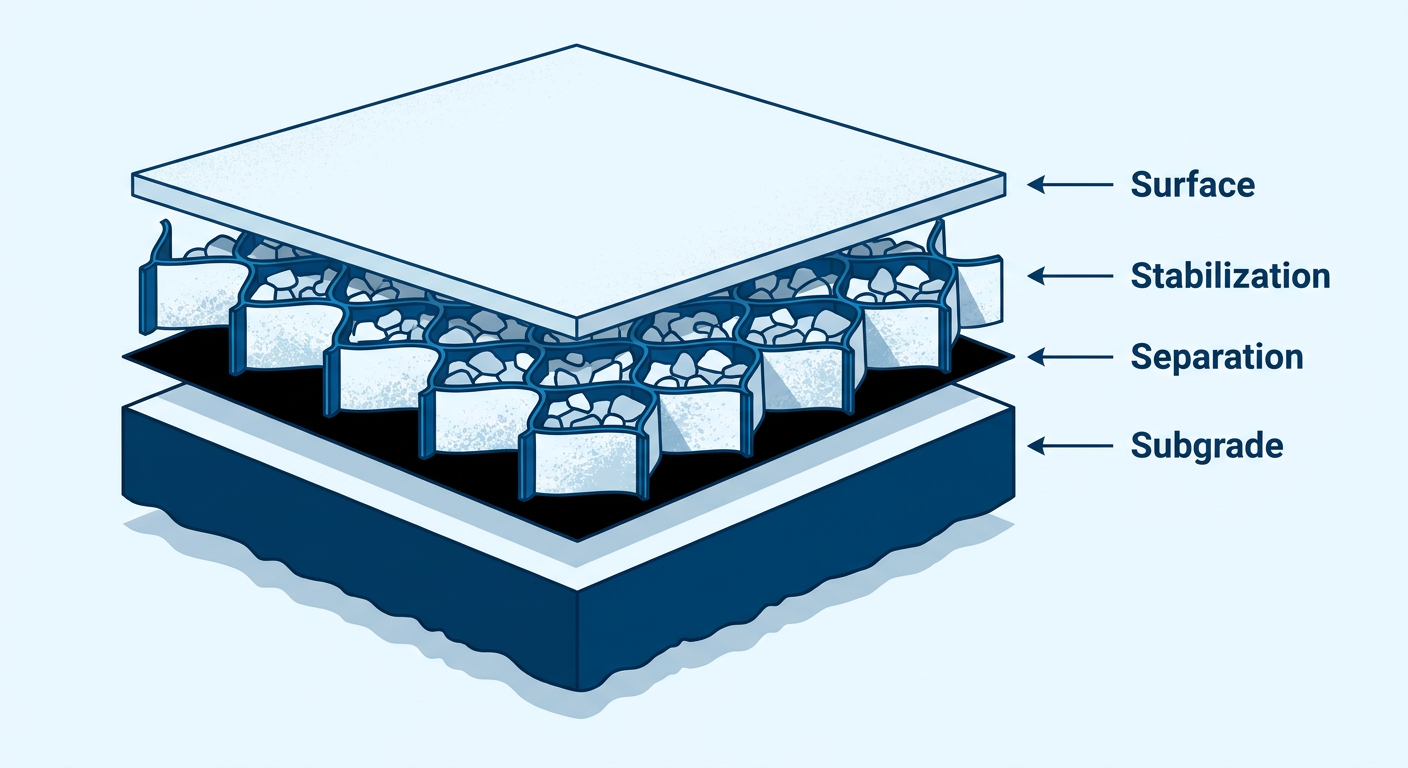
The engineered layers of a mud-free paddock: stabilization prevents soil displacement while allowing drainage.
How Ground Stabilization Prevents Mud
Ground stabilization addresses the root cause of mud: soil displacement under load. The most effective technology for equestrian applications is cellular confinement, commonly called geocell. This honeycomb-like grid system confines infill material within interconnected cells, distributing load laterally and preventing the particle migration that creates mud.
When a horse steps on a geocell-stabilized surface, the cell walls transfer force horizontally across the grid rather than concentrating it vertically into the soil below. The infill material—whether aggregate, native soil, or sand—remains locked in place rather than being pumped out with each step. Water drains vertically through the permeable structure while the surface maintains its integrity.
BaseCore geocell systems are engineered specifically for equestrian applications, with cell dimensions and wall thickness optimized for hoof traffic patterns. Unlike geotextile fabric alone (which provides separation but not structural support) or gravel alone (which migrates and creates hard, uncomfortable footing), geocell creates a stable yet forgiving surface that protects hooves while eliminating mud.
The Correct Ground Stack for Paddock Stabilization
Proper installation sequence is critical. The canonical ground stack for a mud-free paddock, from top to bottom:
Layer Material Purpose Surface Native soil, topsoil, or small aggregate (application-dependent) Hoof-friendly surface that integrates with vegetation if desired Stabilization BaseCore HD geocell panels, typically 3–4" depth for paddocks Confines infill, distributes load, prevents soil displacement Separation Geotextile membrane Prevents subgrade soil from migrating into geocell; installed directly under BaseCore Subgrade Compacted native soil, graded for drainage Foundation layer prepared to shed water toward perimeter or drainage system
The geotextile membrane sits directly beneath the geocell panels—never under a subbase or drainage stone layer. This positioning is essential: the fabric prevents fine soil particles from pumping up into the geocell structure while allowing water to drain freely downward.
Prioritizing High-Impact Zones
Complete paddock stabilization delivers the best results, but budget and time constraints often require prioritization. Research from Michigan State University Extension identifies specific zones that account for the majority of paddock mud problems:
Gates and entry points receive the highest traffic concentration. Horses congregate at gates waiting for turnout, feeding, or herd dynamics. A 10-foot radius around each gate typically shows the worst mud damage and should be the first stabilization priority.
Stabilized high-traffic zones remain firm and dry even during wet seasons.
Water stations create constant moisture combined with traffic. Spillage, splashing, and the natural tendency of horses to stand near water sources makes these areas perpetually vulnerable. Extend stabilization at least 8 feet in all directions from waterers.
Feeding areas see repeated, concentrated traffic at predictable times. Whether using ground feeders, hay nets, or slow feeders, the surrounding zone requires stabilization to prevent the mud that contaminates feed and creates respiratory risks.
Fence lines and shelter entrances experience traffic patterns that create linear mud trenches. Horses pace fences, gather at corners for social interaction, and enter and exit shelters repeatedly. These high-wear paths often need targeted stabilization even when the paddock center remains in good condition.
Performance Footing's mud prevention solutions are designed for modular installation, allowing you to address critical zones first and expand coverage over time.
Ready to eliminate paddock mud? Performance Footing can design a stabilization plan tailored to your property's specific conditions, traffic patterns, and budget. Request a quick quote or call 877-835-0878 to discuss your project.
Step-by-Step Paddock Stabilization Installation
This section provides practical guidance for installing a geocell-based mud prevention system. While professional installation ensures optimal results—especially for large areas or challenging soil conditions—many horse owners successfully complete smaller projects themselves.
Step 1: Site Assessment and Preparation
Begin by observing your paddock during and after rainfall. Note where water pools, where mud forms first, and the direction of natural drainage. This observation informs grading decisions and identifies whether supplemental drainage is needed.
Remove all organic matter, vegetation, and existing mud from the installation area. Excavate to a depth that accommodates your geocell thickness (typically 3–4 inches for paddocks) plus 1–2 inches for the surface infill layer. The finished surface should sit slightly above surrounding grade to prevent water from flowing onto the stabilized area.
Compact the subgrade using a plate compactor or roller. The goal is a firm, uniform base that will not settle unevenly. If your native soil drains poorly, this is the time to install any subsurface drainage—French drains, drainage tile, or perforated pipe should sit at subgrade level, below where the geotextile will be placed.
Step 2: Geotextile Installation
Roll out non-woven geotextile fabric across the prepared subgrade, extending at least 6 inches beyond the planned geocell footprint on all sides. Overlap seams by 12 inches minimum. The fabric prevents subgrade soil from migrating upward while allowing water to drain through—this is why it must sit directly under the geocell, not under any drainage aggregate.
Step 3: Geocell Panel Placement
Expand BaseCore panels across the geotextile, connecting adjacent panels using the integrated connection system. Panels should fit snugly without gaps. For paddock applications, 3–4 inch depth geocell provides adequate load distribution under typical hoof traffic; high-traffic sacrifice lots or areas with poor subgrade may warrant 4-inch depth.
BaseCore geocell panels expanded and ready for aggregate infill.
Secure panel edges at the perimeter using J-stakes driven through the geocell walls into the subgrade. Interior staking is typically unnecessary once panels are filled, but may be helpful during installation to keep panels in position.
Step 4: Infill Selection and Placement
Infill material depends on your intended use:
Vegetated paddocks: Fill cells with native topsoil and seed with appropriate pasture grass. The geocell protects root zones from compaction while allowing grass to establish and provide natural footing.
Sacrifice lots and high-traffic zones: Use 3/4-inch clean angular aggregate for maximum durability. Angular stone interlocks better than round gravel and resists displacement.
Transitional areas: Smaller angular stone or granite screenings provide a compromise between grass-friendly surfaces and high-durability aggregate.
Fill cells to the top of the geocell walls, then add a thin topping layer (1–2 inches) to cover the cell walls and create a uniform surface. Compact lightly with a plate compactor or allow horses to consolidate the material naturally over the first few weeks.
Step 5: Drainage Integration
Ensure the finished surface directs water away from buildings, toward paddock perimeters, and into appropriate drainage outlets. A 1–2% slope is sufficient for sheet flow across stabilized surfaces. For larger paddocks, consider subtle swales that channel water without creating low points where horses congregate.
Sacrifice Lot Design for Mud Prevention
Sacrifice lots—small, heavily used turnout areas designed to protect pastures during wet conditions or rest periods—require the most robust mud prevention approach. These areas accept concentrated traffic precisely when conditions are worst for soil stability.
The arena construction guide principles apply to sacrifice lot design: proper base preparation, drainage, stabilization, and surface selection working as an integrated system.
Size sacrifice lots appropriately—Penn State Extension recommends a minimum of 400 square feet per horse for short-term use, though 600–1,000 square feet provides better welfare and surface longevity. Rectangular or oval shapes with rounded corners reduce fence-line pacing damage and eliminate corner mud traps.
Position sacrifice lots on the highest available ground with natural drainage away from the area. If topography requires locating on lower ground, invest in perimeter drainage and potentially subsurface drainage to manage water that flows toward the lot.
For sacrifice lots, full geocell coverage is the only reliable approach. Partial stabilization creates transition zones where mud migrates onto stabilized areas and horses churn the unstabilized portions into impassable muck. The investment in complete coverage pays dividends in reduced maintenance, healthier horses, and year-round usability.
Maintaining Mud-Free Paddocks
Even well-designed stabilization systems require ongoing maintenance to perform optimally. Fortunately, maintenance requirements are minimal compared to fighting mud in unstabilized paddocks.
Manure management is the most important maintenance task. Manure accumulation reduces drainage, adds moisture-holding organic matter, and creates parasite habitat. Remove manure at least twice weekly—daily in sacrifice lots with high stocking density.
Infill replenishment may be needed annually in high-traffic zones. Aggregate infill can migrate or compact over time, exposing geocell walls. Add topping material as needed to maintain a uniform surface 1–2 inches above the cell walls.
Drainage monitoring ensures water continues to flow away from stabilized areas. Check that perimeter drainage remains clear, swales have not silted in, and no new low spots have developed that would direct water onto the paddock.
Vegetation management for grass-filled geocell installations includes mowing, overseeding bare spots, and avoiding overgrazing. The geocell protects root zones from compaction but cannot prevent damage from horses eating grass down to bare soil.
Why Is Mud Dangerous for Horses?
Mud creates serious health risks including thrush, white line disease, scratches (pastern dermatitis), and soft tissue injuries from unstable footing. The anaerobic environment inside deep mud is ideal for the bacteria and fungi that cause hoof infections. Research from the Royal Veterinary College links prolonged mud exposure to increased rates of tendon and ligament injuries as horses struggle to maintain balance on unstable surfaces.
Beyond infection risk, mud forces horses to adopt unnatural movement patterns that stress joints and soft tissues. A horse navigating deep mud cannot move freely, often standing in one position for extended periods rather than exercising naturally. This immobility contributes to stocking up, reduced circulation, and psychological stress.
Contaminated mud also harbors internal parasites. Horses grazing or eating hay from muddy surfaces ingest parasite larvae at much higher rates than those on clean, stabilized footing.
How Deep Should Aggregate Be in a Sacrifice Lot?
For sacrifice lots, install 3–4 inch deep geocell panels filled with angular aggregate, topped with 1–2 inches of surface material for a total finished depth of 4–6 inches above the geotextile. This depth provides adequate load distribution under concentrated hoof traffic while remaining comfortable for horses to stand and move on.
Depth requirements vary based on subgrade conditions, drainage, and traffic intensity. Facilities with poor clay subgrades or very high stocking density may benefit from 4-inch geocell rather than 3-inch. Areas with excellent drainage and firm subgrade may perform well with 3-inch depth. The free arena consultation service can help determine appropriate specifications for your site conditions.
Can You Prevent Mud in Horse Paddocks Without Removing Grass?
Yes—geocell systems filled with topsoil allow grass to grow through the stabilized grid, maintaining a vegetated paddock surface while preventing the soil displacement that causes mud. The cellular confinement protects grass root zones from compaction, actually improving growing conditions compared to unstabilized pasture under hoof traffic.
This approach works best for paddocks with moderate traffic and rotational grazing practices. High-traffic areas like gates and waterers should still use aggregate infill for maximum durability. Many facilities use a hybrid approach: aggregate-filled geocell in high-traffic zones transitioning to soil-filled, vegetated geocell across the general paddock area.
Success with vegetated geocell requires appropriate grass species selection for your climate and soil type, proper establishment timing (ideally spring or early fall), and rest periods during initial grass establishment. Performance Footing's regional guidance can help identify grass species that perform well with geocell stabilization in your area.
Building Your Mud Prevention Plan
The research is clear: chronically muddy conditions compromise hoof health, increase injury risk, and create management burdens that drain time and money. The 340% increase in white line disease documented in muddy paddocks represents preventable harm to horses in your care.
Effective mud prevention is not about fighting water or accepting compromise solutions—it is about engineering ground conditions where mud cannot form. Geocell stabilization, proper drainage, and strategic prioritization of high-traffic zones create paddocks and turnouts that remain usable year-round, in any weather, for the life of your facility.
Performance Footing has helped equestrian facilities across the country eliminate paddock mud using BaseCore geocell systems engineered specifically for horse properties. Whether you are stabilizing a single gate area or designing a complete sacrifice lot system, their team can provide specifications tailored to your soil type, climate, traffic patterns, and budget.
Take the first step toward mud-free turnout: Request a quick quote or call 877-835-0878 to discuss your paddock project with a ground stabilization specialist.
Frequently Asked Questions
What is the best footing for a muddy horse paddock?
Angular aggregate (3/4-inch crushed stone) installed over geocell panels provides the most durable, mud-resistant surface for high-traffic paddocks and sacrifice lots. The geocell confines the aggregate to prevent migration while allowing drainage. For lower-traffic areas where vegetation is desired, geocell filled with topsoil supports grass growth while preventing mud formation.
How much does it cost to stabilize a muddy paddock?
Costs vary based on area size, soil conditions, and material choices. A geocell-based stabilization system typically represents a larger upfront investment than gravel alone but eliminates the recurring costs of annual gravel replenishment, veterinary bills from mud-related hoof problems, and labor spent managing chronic mud. Request a quote for project-specific pricing.
Will landscape fabric prevent mud in horse paddocks?
Landscape fabric alone does not prevent mud. Fabric provides separation between soil layers but offers no structural support against hoof traffic. Horses quickly churn through fabric and any gravel placed above it. Effective mud prevention requires cellular confinement (geocell) to distribute load and contain infill material, with geotextile fabric installed directly beneath as a separation layer.
How do I keep mud away from my horse's water trough?
Install geocell stabilization in a minimum 8-foot radius around water troughs, filled with angular aggregate for durability. Position troughs on the highest available ground within the paddock, and ensure the stabilized area grades slightly away from the trough to direct spillage toward drainage. Automatic waterers that minimize spillage reduce moisture loading in this high-traffic zone.
Can I install geocell mud prevention myself?
Many horse owners successfully complete DIY geocell installations for smaller areas like gate zones, water stations, and feeding areas. Proper subgrade preparation and correct layer sequencing—geotextile directly under geocell, not under drainage aggregate—are critical for success. Larger projects or challenging soil conditions benefit from professional installation. Contact Performance Footing to discuss whether your project is appropriate for DIY or warrants professional support.
This article is for informational purposes only. The information provided reflects published equestrian research, FEI and governing-body guidelines, and Performance Footing's product expertise. Surface conditions, climate, soil type, and facility use vary widely—consult Performance Footing or a qualified arena builder for site-specific recommendations. For current product information, pricing, and availability, visit performancefooting.com or call 877-835-0878.