
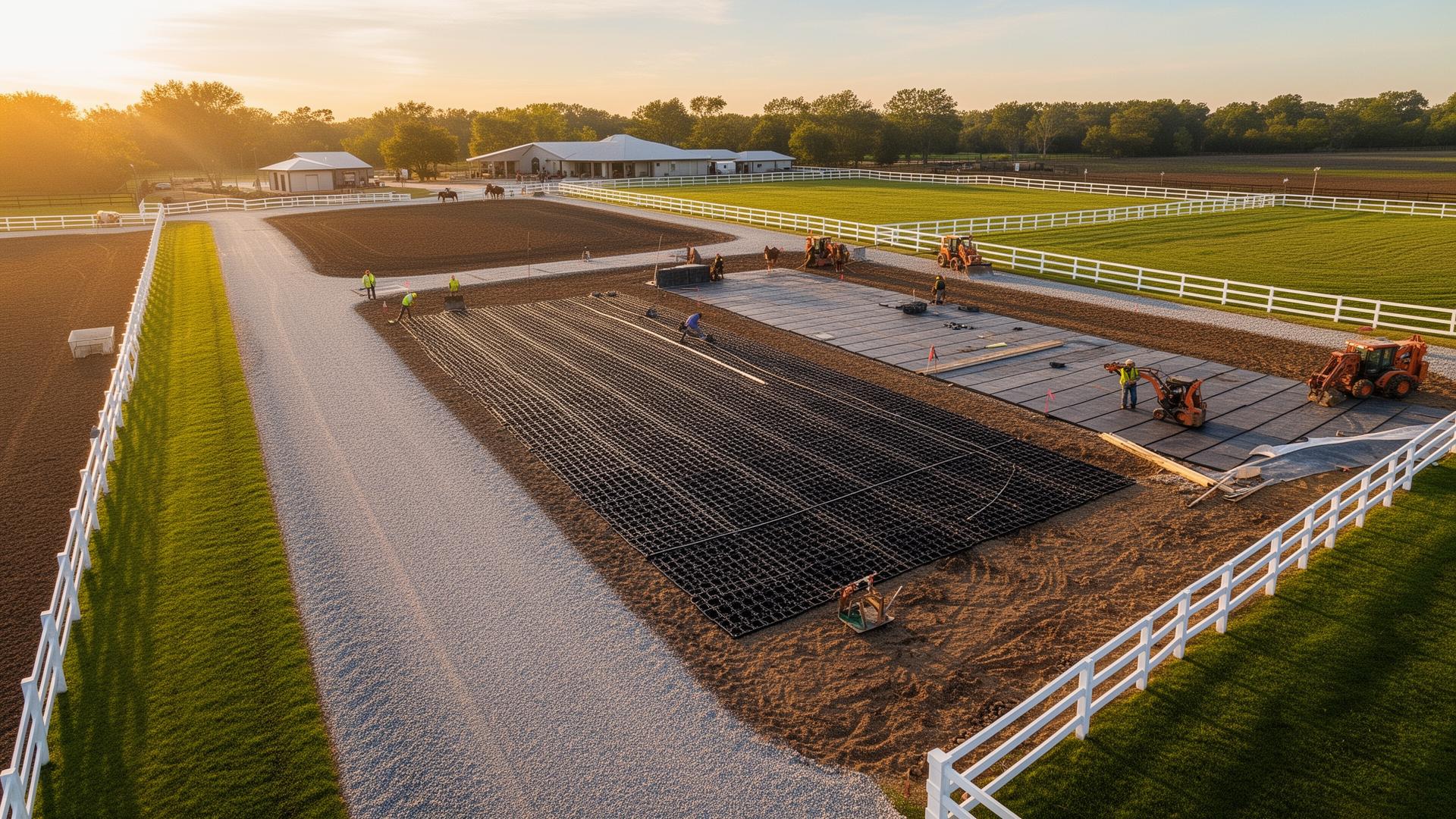
Mud isn't a weather problem — it's an engineering problem
Every equestrian property deals with mud. But mud isn't inevitable — it's the result of inadequate drainage, soil compaction, and surfaces that weren't designed for the traffic they receive. Once the cycle starts, it gets worse every year.
Adding gravel, sand, or wood chips on top of a mud problem is a temporary fix that requires constant replenishment. The material migrates, compacts, and gets absorbed into the soil beneath — and you're back where you started within a season.
Our approach treats the root cause: subsurface stabilization, proper drainage engineering, and surface materials selected for the specific traffic and conditions of each zone. The result is a permanent solution that eliminates mud and reduces long-term maintenance costs.
Problem Zones
Where mud hits hardest
Mud doesn't affect your property uniformly. These high-traffic zones break down first and need targeted stabilization solutions.
Paddocks & Turnout Areas
The most common mud problem on any equestrian property. Constant hoof traffic destroys grass, compacts soil, and creates standing water that turns paddocks into unusable mud pits.
Gate Areas & High-Traffic Zones
Gates, water troughs, and feeding areas concentrate traffic into small zones that break down fastest. These areas need targeted stabilization that handles repetitive, concentrated loads.
Run-In Sheds & Shelter Areas
The areas around run-in sheds and shelters collect traffic as horses move in and out. Without stabilization, these transition zones become the muddiest spots on the property.
Barn Approaches & Wash Areas
Barn entries, wash racks, and grooming areas see constant water and foot traffic. Proper drainage and surface stabilization keep these areas safe and functional year-round.
The Real Cost of Mud
Mud is a health hazard — not just an inconvenience
The impact of mud extends far beyond dirty legs. Chronic mud exposure creates compounding health and financial consequences.
Thrush & Hoof Disease
Standing in mud creates the anaerobic conditions that cause thrush, white line disease, and other hoof infections. Eliminating mud eliminates the breeding ground.
Joint & Tendon Stress
Deep mud forces horses to work harder with every step, stressing joints, tendons, and ligaments. Firm, stable footing reduces the risk of soft-tissue injuries.
Skin Conditions
Prolonged mud exposure causes scratches, rain rot, and dermatitis. Clean, dry standing surfaces protect skin health and reduce veterinary costs.
Ongoing Costs
Mud costs money every season — lost footing material, additional bedding, veterinary bills, fencing damage, and the labor to manage it all. Solving it once eliminates the cycle.
Mud Prevention Products
Products engineered to eliminate mud
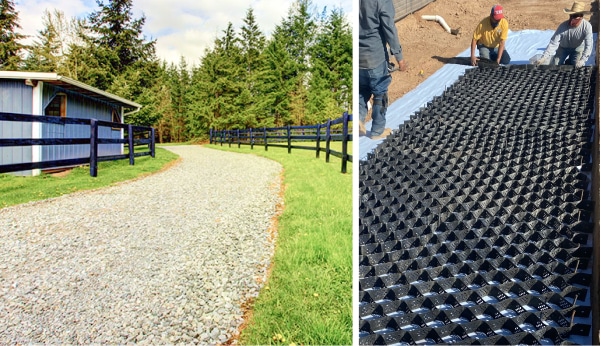
Each product addresses a different layer of the mud problem — subsurface stabilization, surface reinforcement, and layer separation.

Why Act Now
Mud gets worse — never better
Every season without proper stabilization deepens the compaction cycle, destroys more topsoil, and increases the cost of a permanent fix.
Mud gets worse every year — the compaction cycle deepens, drainage deteriorates, and costs increase
Hoof health issues from mud exposure are cumulative and often irreversible
Property value and usability decline with every season of unaddressed mud
A properly engineered mud prevention system pays for itself within 2–3 seasons
The same stabilization technology that supports arena bases works in paddocks and turnout areas