


The completion of your new horse arena marks both an ending and a beginning. While the construction crews have departed, the most critical phase of your arena’s life has just begun. According to equestrian construction specialists, it typically takes around three months for horse arena footing to settle into its ideal texture—but the foundation for that settling process is established during the first 30 days.
This commissioning period determines whether your arena delivers years of consistent, safe footing or becomes a source of ongoing frustration and potential injury risk. Understanding what happens during this break-in phase—and how to manage it properly—transforms your investment from a completed project into a high-performing equestrian surface.
Understanding the Arena Break-In Period
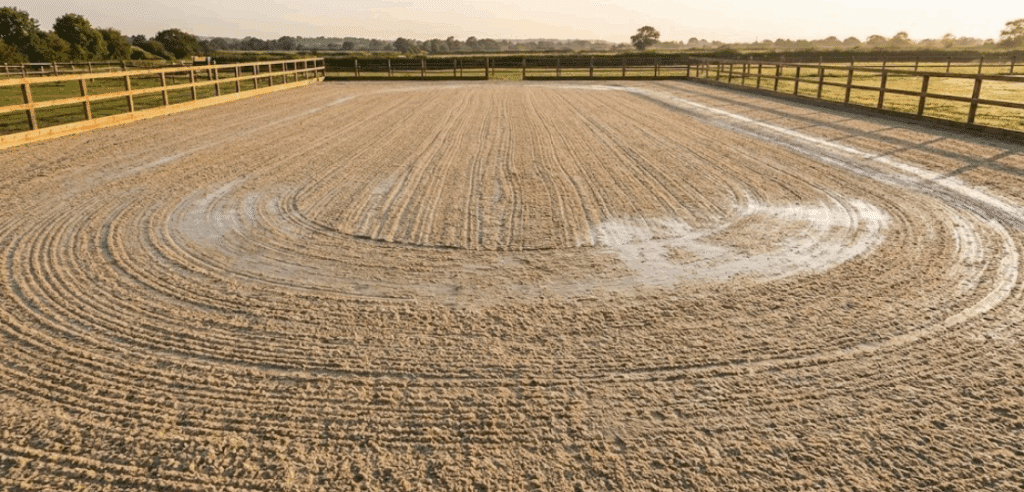
When fresh footing materials are installed, they contain air pockets that provide initial shock absorption and rebound. As Penn State Extension’s research on riding arena footing explains, “Newly laid sand contains air pockets that absorb shock and rebounds. However, despite its solid, inorganic nature, sand will erode and compact into an unsuitable surface over time.”
The break-in period is when you guide this natural settling process rather than letting it happen haphazardly. Without proper commissioning, footing can compact unevenly, develop hard spots, or settle in ways that create unsafe conditions for horses and riders.
What Happens During Settling
During the first 30 days and beyond, several physical processes occur simultaneously within your new footing:
Particle Migration. Sand particles of different sizes naturally sort themselves. According to industry research, this “Brazil Nut Effect” causes larger particles to rise to the surface when the footing is agitated, while smaller particles settle below. Regular grooming during the break-in period counteracts this separation and keeps particles evenly distributed.
Moisture Integration. Water must penetrate throughout the footing depth to properly activate binding properties in additives and help materials find their working configuration. This process requires consistent, light watering rather than occasional heavy soaking.
Base Knitting. The loose footing must develop a connection with the compacted base material beneath it. Penn State Extension emphasizes that “The footing needs to ‘knit’ to the base material, meaning that loose footing is not allowed to freely slide along the compacted base as horses work.”
Air Pocket Reduction. The beneficial air pockets present in fresh footing gradually compress under use. Professional installers typically add a compaction factor of 15-20% to account for this settlement, meaning your footing depth will decrease slightly over the first few months.
The First Week: Establishing Foundation Protocols
The initial seven days after footing installation set the trajectory for everything that follows. Your primary goals during this period are establishing moisture levels, beginning the settling process, and avoiding damage to the still-vulnerable surface.
Day 1-3: Initial Hydration
Before any horses enter the arena, the footing requires thorough initial watering. This serves multiple purposes: activating any fiber or textile additives, helping particles begin their settling process, and establishing a baseline moisture level throughout the footing depth.
Apply water in light, even applications rather than flooding the surface. Industry experts describe the ideal approach as “morning dew, not thunderstorm.” Too much water too fast creates surface pooling and can drive additives deeper than intended. Use a traveling sprinkler or spray nozzle that produces fine droplets, allowing each application to soak in before adding more.
This initial hydration might require multiple sessions over several days to achieve consistent moisture throughout the footing depth—not just surface wetness.
Day 4-7: Light Introduction
After initial hydration, you can begin introducing horses to the arena—but with careful limitations. During this first week, avoid high-impact activities entirely. Walking and light flat work allow the footing to begin settling under natural hoof action without the stress of collected movements, jumping, or sharp turns.
Limit session durations and the number of horses using the arena simultaneously. The goal is gradual compression and settling, not immediate heavy use that could create uneven compaction patterns.
Week Two: Developing Maintenance Rhythms

The second week focuses on establishing the daily and weekly routines that will carry forward throughout the arena’s life. As one industry source notes, “From the first day of riding in your new arena, you will soon see the need for a maintenance program to keep it in optimum riding condition.”
Daily Grooming Protocol
Begin regular dragging during week two, even if the arena sees limited use. According to Penn State Extension guidelines, “Plan to drag the arena at least once per week even for arenas that are lightly used for riding (three times per day for heavily used arenas).” During the commissioning period, daily light grooming prevents the formation of traffic patterns that would cause uneven settling.
Change your dragging pattern each day. By regularly altering the direction and pattern of arena grooming, you prevent the tractor from creating its own compaction tracks while more effectively leveling peaks and valleys.
For arenas with textile additives, consistent dampness during this period is essential. Watering should occur daily, or at minimum on an as-needed basis, to ensure proper integration between sand particles and fiber components.
Equipment Considerations
The type of grooming equipment matters significantly during the break-in period. Older-style chain drags or equipment with only straight teeth cannot properly mix sand particles and don’t work effectively with textile additives. Modern arena groomers with adjustable tine depths allow you to work the surface appropriately for its current condition.
During commissioning, set your grooming equipment to work the full depth of the footing without disturbing the base beneath. The goal is redistributing and fluffing the entire footing layer while maintaining its connection to the compacted foundation.
Weeks Three and Four: Graduated Intensity
By the third week, your footing has begun its settling process and can tolerate increased activity levels—but still with measured progression.
Expanding Permitted Activities
Gradually introduce more demanding work during this period. Light jumping with ground poles or cavaletti can begin mid-third week for arenas intended for jumping disciplines. Lateral work and collection for dressage arenas can increase. Western arenas can begin incorporating moderate speed work and transitions.
The key word is “gradual.” Watch the footing closely after each session for signs of uneven wear, excessive displacement around activity areas, or depth inconsistencies. These observations guide your maintenance adjustments.
Addressing Traffic Patterns
Even with varied use, certain areas naturally receive more traffic: the rail, around jump standards, spots where instructors stand, and areas where horses commonly change direction. Penn State Extension notes that “the position where riding instructors stand is among the most compacted footing in an arena”—an often-overlooked factor.
During weeks three and four, pay particular attention to these high-traffic zones during grooming. You may need to specifically work these areas to counteract accelerated compaction while the rest of the arena continues its more gradual settling process.
Monitoring Moisture Levels
As the footing settles, its moisture retention characteristics change. The air pockets that initially helped hold water compress, potentially requiring adjustments to your watering schedule. Check moisture levels at depth, not just the surface, by pressing your hand into the footing or using a probe.
Properly moistened footing should feel damp throughout its depth without being muddy or waterlogged. Surface appearance can be deceiving—dust on top doesn’t always mean dryness below, and apparent wetness doesn’t guarantee moisture has penetrated fully.
The 30-Day Milestone: Assessment and Adjustment
After one month, your arena has completed the first critical phase of its settling process. This milestone calls for a comprehensive assessment of where things stand and what adjustments might be needed going forward.
Depth Verification
Using a marked probe (a long screwdriver works well), check footing depth at multiple points throughout the arena: along the rail, on the quarter lines, at the center, and in any areas that received concentrated use. Record these measurements on a grid pattern.
Remember that professional installers add 15-20% extra material to account for settling. By the 30-day mark, you should see some depth reduction from initial installation—this is normal and expected. What matters is consistency across the arena. Significant variations indicate areas that may need additional material or focused maintenance attention.
Surface Condition Evaluation
Walk the arena without horses and assess the footing’s feel and appearance:
Does the surface provide consistent support throughout, or are there soft spots and hard spots? Do materials stay evenly mixed, or are you seeing separation with larger particles on top? Is dust controlled when the arena is properly watered? Does the footing maintain its condition between grooming sessions?
These observations help identify whether your break-in protocols have been successful or if adjustments are needed for the continuing settling period.
Planning for Months Two and Three
While the first 30 days establish crucial patterns, the settling process continues for approximately three months total. Industry specialists recommend avoiding heavy impact activities like intensive lunging or advanced jumping throughout this extended period.
The second and third months allow for gradually normalized use while continuing diligent maintenance. By the end of month three, your footing should have reached its working configuration—the texture and performance characteristics it will maintain with proper ongoing care.
Critical Factors That Affect Your Break-In Success
Several variables influence how your specific arena responds during commissioning. Understanding these factors helps you adapt general guidelines to your unique situation.
Climate and Season
Arenas commissioned during different seasons face different challenges. Spring installations may contend with excessive moisture from seasonal rains, potentially slowing the settling process or creating drainage issues. Summer commissioning risks rapid drying that prevents proper moisture integration.
Fall installation often provides ideal conditions: moderate temperatures, manageable moisture levels, and reduced insect activity. Winter brings its own complications, including potential freezing before settling completes.
Adjust your watering schedule, session timing, and activity progression based on current weather conditions rather than following a rigid calendar.
Footing Composition
Different footing materials and additives have distinct break-in characteristics. Pure sand arenas may settle more quickly but require vigilant moisture management. Footing with rubber additives provides inherent cushioning but needs time for particles to integrate properly. Fiber-enhanced footings require consistent moisture to maintain the binding between sand and textile components.
If your arena includes specialty additives like Levitare or organic fibers, follow manufacturer guidelines for the break-in period, as these materials often have specific moisture and use requirements during initial settling.
Intended Discipline
A dressage arena used primarily for flat work will settle differently than a jumping arena subject to concentrated impact in landing zones. Reining arenas face the challenge of maintaining sliding capability while achieving appropriate compaction.
Consider your primary discipline when establishing break-in protocols. Arenas intended for high-impact work may benefit from a more extended gradual introduction period, while those used primarily for light flat work can progress somewhat faster.
Common Commissioning Mistakes to Avoid
Understanding what not to do during the break-in period is equally important as knowing correct procedures.
Rushing Full Operation
The temptation to immediately use your new arena at full intensity is understandable—you’ve invested significantly and want to enjoy the results. However, premature heavy use creates uneven compaction, disrupts the settling process, and can cause problems that require extensive remediation.
Patience during the first 30 days pays dividends for years afterward.
Inconsistent Maintenance
Sporadic attention during the break-in period leads to uneven results. The arena needs daily monitoring and regular grooming throughout commissioning, even if use levels are low. Neglecting maintenance during this critical period allows problems to develop that become much harder to correct later.
Improper Watering
Both under-watering and over-watering cause issues during settling. Insufficient moisture prevents proper particle integration and allows excessive dust. Excessive watering can waterlog the footing, prevent normal compaction, or—for outdoor arenas—wash materials out of position.
Aim for consistent, appropriate moisture levels maintained through regular light applications rather than infrequent heavy soaking.
Using Wrong Equipment
Standard farm equipment like box blades or landscape rakes can damage new footing during the break-in period. These aggressive tools are designed to move material forcefully, which can disrupt the settling process or damage the footing-base interface.
Use appropriate arena grooming equipment designed for equestrian surfaces, and set it properly for your specific footing depth and composition.
Signs Your Break-In Is Progressing Well
Successful commissioning produces observable results. By the 30-day mark, look for these positive indicators:
Consistent Depth. Measurements across the arena show minimal variation, typically within half an inch throughout.
Even Texture. The footing appearance and feel remain uniform from rail to centerline, without obvious hard or soft zones.
Stable Moisture. Properly watered footing maintains its condition for several hours rather than drying excessively quickly or staying waterlogged.
Good Recovery. After use, the footing returns to its groomed condition without developing persistent ruts, holes, or displaced areas.
Dust Control. When appropriately watered, dust remains minimal during normal work.
If you’re observing these characteristics, your commissioning is on track. Continue your established protocols through the full three-month settling period for best long-term results.
Beyond 30 Days: Continuing the Process
The first month establishes patterns, but commissioning extends through approximately three months total. During months two and three:
Continue daily or near-daily grooming to guide ongoing settling. Gradually increase activity intensity toward normal operating levels. Monitor depth regularly and add material if needed to maintain target specifications. Begin transitioning from commissioning protocols to your permanent maintenance routine. Conduct a thorough “annual” assessment at the three-month mark to establish baseline conditions.
By the end of month three, your arena should be fully operational and ready for its permanent maintenance program.
Investing in Your Arena’s Future
The first 30 days of your new arena’s life require attention, patience, and consistent effort. This investment of time and care during commissioning pays returns for years—potentially decades—in the form of consistent, safe footing that supports your horses’ health and performance.
As Jennifer Brinkman-Ayers of Performance Footing notes in educational resources, proper maintenance is critical to ensure the longevity of your arena investment and provide the best possible surface for horse welfare and performance. The commissioning period establishes the foundation for everything that follows.
Your new arena represents a significant investment in your equestrian pursuits. Give it the attention it deserves during these crucial first weeks, and it will reward you with reliable performance through countless rides to come.
FAQ Section
How long does it take for new arena footing to fully settle?
Industry specialists indicate approximately three months for horse arena footing to settle into its ideal texture. The first 30 days are most critical, but continued careful management through month three ensures optimal results.
Can I use my new arena immediately after installation?
Light use can begin after initial hydration (typically 3-7 days), but avoid high-impact activities like jumping or intensive lunging during the settling period. Gradual introduction protects your investment.
How often should I water my arena during the break-in period?
Daily watering is recommended during commissioning, applied in light, even applications. Footing with textile additives requires consistent moisture to properly integrate sand and fiber components.
Why is my new arena footing deeper in some areas than others after a month?
Uneven settling typically indicates inconsistent use patterns, inadequate grooming, or areas where moisture levels weren’t properly maintained. Increased grooming attention to affected areas usually resolves minor variations.
Should I add more material after the initial settling?
Professional installers add 15-20% extra material anticipating settlement. Evaluate depth at the 30-day and 90-day marks; add material only if measurements fall below your target specifications.
This article references publicly available information from Penn State Extension and established industry publications including The Horse and Horse Journals, dated 2018-2025. All recommendations represent general best practices for equestrian arena commissioning. Results vary based on specific footing materials, climate conditions, and intended use. For current product specifications and installation guidance, consult directly with your footing supplier or arena construction professional.