


A landmark study by the Animal Health Trust and University of Glasgow determined that arena footing ranks among the major risk factors for dressage horses developing lameness. The survey of over 2,500 British Dressage members found that uneven surfaces—whether too wet or too dry—significantly elevated injury risk across all skill levels. For facility owners, this research underscores a critical truth: the sand beneath your horse’s hooves determines everything from soundness to competitive success.
This guide explains how to read sand sieve analysis reports, interpret the proven specifications for indoor and outdoor arenas, and select sand that delivers optimal performance for your specific discipline. You’ll also learn how specialized footing additives can transform regionally available sand into professional-grade surfaces—addressing the compaction, instability, and dust issues that plague arenas built with sand alone.
What Is Sieve Analysis and Why It Matters for Your Arena
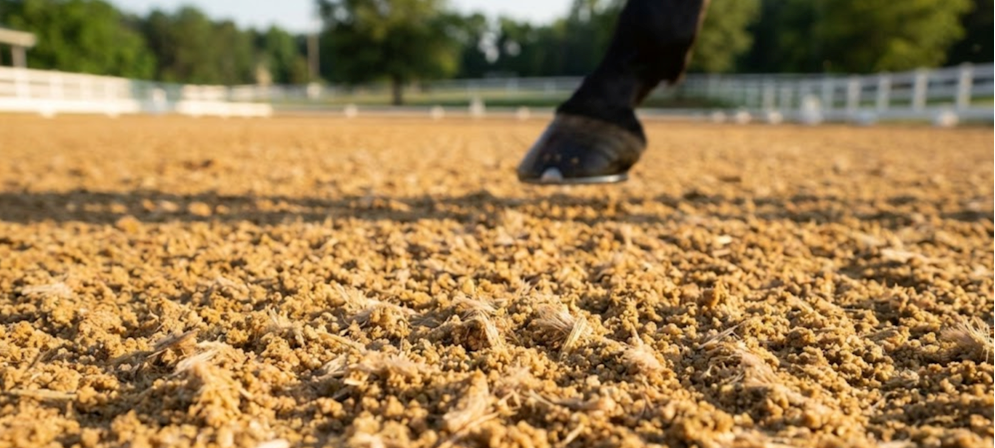
Sieve analysis is the industry-standard method for classifying sand particles by size. This process involves passing a sand sample through a series of mesh screens—from coarse to fine—and measuring what percentage remains on each sieve. The resulting distribution directly determines how your arena performs under hoof.
Understanding these results matters for three critical performance factors:
Stability and traction depend on how particles interlock. Penn State Extension’s arena footing research explains that uniformly-sized round particles “roll like ball bearings,” creating an unstable surface that shifts unpredictably. Properly graded sub-angular particles nest together, providing the secure footing horses need for confident movement.
Cushioning and shock absorption correlate with pore space between particles. The FEI’s Equestrian Surfaces Guide, published in 2014 with input from the Swedish University of Agricultural Sciences, established that particle size distribution determines how effectively arena surfaces absorb impact during movement. Too-fine particles compact into hard surfaces; too-coarse particles create excessive depth.
Consistency across conditions separates professional arenas from problematic ones. The FEI research found that “unexpected conditions hidden within an otherwise excellent footing were more devastating to horse soundness than riding on a footing that was uniformly poor.” Horses adapt to consistent surfaces but struggle with unpredictable variations.
The Science Behind Sand Sieve Specifications

Performance Footing developed specific sieve analysis targets for both indoor and outdoor applications based on decades of arena construction experience. These specifications provide precise benchmarks that transform the sand selection process from guesswork to science.
Outdoor Arena Sand Specifications
The outdoor sand sieve targets specify the following particle distribution:
At the US Mesh 18 screen (1.0mm openings), the target is 0% retention—meaning virtually no particles larger than 1mm should be present. At Mesh 35 (0.5mm), the target increases to 7.40% retained. The bulk of particles should be caught at Mesh 60 (0.25mm) with a 48.50% target, followed by 34.00% at Mesh 100 (0.15mm).
The finer screens capture remaining material: 7.40% at Mesh 140 (0.106mm) and just 1.50% at Mesh 270 (0.053mm). The pan—catching all particles smaller than 0.053mm—should contain 0% to minimize dust-producing fines.
This distribution creates outdoor footing that drains efficiently while maintaining stability through weather changes. The emphasis on medium particles (Mesh 60 and 100 capturing over 82% of material) provides the interlocking structure needed for year-round performance.
Indoor Arena Sand Specifications
For indoor arenas, the specifications mirror the outdoor targets at most sieve sizes. Both specify 7.40% at Mesh 35, 48.50% at Mesh 60, 34.00% at Mesh 100, 7.40% at Mesh 140, and 1.50% at Mesh 270.
Sample analyses show slight variations in practice—with some indoor sands showing 42.07% retained per sieve at Mesh 60 compared to outdoor samples at 52.59%. This reflects the reality that sand sources vary by region, and the specifications provide targets rather than absolute requirements.
Both indoor and outdoor specifications aim for near-zero content in the pan, emphasizing that particles smaller than 0.053mm create the dust and compaction problems that plague many facilities.
How Sand Selection Impacts Performance by Discipline
Different equestrian disciplines place unique demands on arena footing. Understanding these requirements ensures you select sand—and appropriate additives—that support your specific riding goals.
Dressage Arena Requirements
Dressage demands precise movements, collected gaits, and seamless transitions. The footing must provide consistent support without being too deep or shifting unpredictably during lateral work.
Optimal particle sizes range from 0.42mm to 2.0mm (sieve #40 to #10), with these benchmarks: less than 5% fines passing through a #200 sieve, and 60-80% passing through a #50 sieve. This gradation allows horses to push off confidently while maintaining the suspension and impulsion that judges reward.
Sand that compacts too tightly impedes the horse’s ability to perform collected movements—the hindquarters cannot engage properly on hard surfaces. Conversely, sand that’s too loose makes extended gaits labored and fatiguing.
For dressage applications, additives like FoamFooting and Levitare provide the cushioning and stability that pure sand often lacks. These products create a forgiving surface that supports complex movements while reducing joint strain during repetitive schooling sessions.
Jumping Arena Specifications
Jumping places enormous demands on footing during take-off and landing. Horses need surfaces that absorb shock without being so deep that they tire prematurely or risk soft tissue injuries.
Slightly coarser sand works best—typically 0.6mm to 3.15mm (sieve #30 to #6). This provides better grip for the powerful push-off required to clear obstacles. Fines should remain under 5%, with coarse particles below 10%.
UC Davis biomedical engineering research analyzed how arena surfaces affect jumping horses. The findings confirmed that surface consistency matters more than any single specification. When footing compresses unevenly, the resulting variations in impact force increase injury risk significantly.
Additives like Performance Footing Fiber Fiber and Levitare excel in jumping applications by providing shock absorption during landing while maintaining the stable base needed for confident take-offs. These products also help surfaces recover between rounds at competitions, reducing the degradation that occurs when multiple horses work the same track.
Western Discipline Needs
Western disciplines—reining, barrel racing, cutting, and ranch work—require footing that supports quick stops, sharp turns, and explosive acceleration. The surface must allow controlled sliding without being unpredictable.
Medium to coarse sand ranging from 0.85mm to 4.76mm (sieve #20 to #4) provides the traction western horses need. Fines should stay very low, ideally under 2%, because dust becomes problematic during fast-paced work and excessive fines create surfaces that pack too hard for sliding stops.
Barrel racing and reining particularly benefit from footing that provides consistent “give” during maneuvers. Many western riders find that local sand alone creates surfaces that are either too hard (causing jarring stops) or too loose (preventing proper slide control).
Levitare has proven particularly effective for western disciplines, providing the balance of stability and controlled movement needed for quick turns and sliding stops. The product maintains its performance characteristics even under the demanding use patterns western training requires.
Multi-Use Facility Considerations
Facilities hosting multiple disciplines face the challenge of creating footing that serves varied needs. The key is selecting sand within the middle ranges that work reasonably well for all uses, then relying on proper maintenance and strategic additive selection.
A gradation centered on the Mesh 60 and Mesh 100 targets (48.50% and 34.00% respectively) provides a versatile foundation. From there, additives can fine-tune performance: FoamFooting adds cushion for jumping days, while proper grooming depth adjustments accommodate different discipline requirements.
Why Local Sand Rarely Meets Arena Standards—And How Additives Solve the Problem
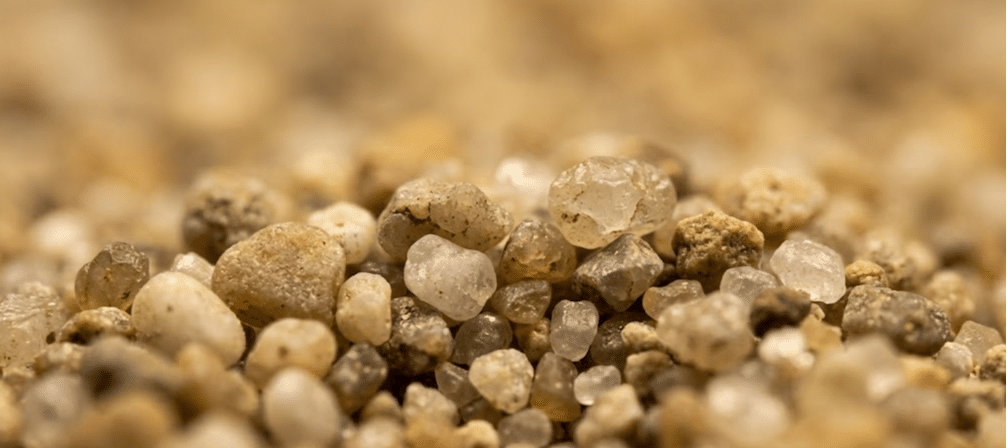
Most horse owners discover that sand available from local quarries falls short of optimal arena specifications. Regional geology determines what’s available, and few areas naturally produce sand with ideal particle distribution, angularity, and mineral composition.
Common problems with locally-sourced sand include:
Excessive compaction occurs when sand contains too many fine particles or angular shapes that lock together under use. The resulting hard surface increases concussion on horses’ legs and creates uncomfortable footing that discourages forward movement.
Poor stability develops when sand particles are too round or uniformly sized. These surfaces shift unpredictably, undermining horse confidence and creating uneven areas that require constant maintenance.
Dust generation plagues arenas built with sand containing high percentages of fines. Beyond creating unpleasant riding conditions, excessive dust requires frequent watering that changes footing characteristics and increases maintenance burden.
Drainage failures result from sand with improper gradation. Too-fine particles create dense layers that hold water; too-coarse particles drain so quickly that moisture management becomes impossible.
How Footing Additives Transform Local Sand
Professional-grade arena surfaces rarely rely on sand alone. Specialized additives address the inherent limitations of regionally available materials, creating footing that performs at competition standards regardless of local sand quality.
FoamFooting provides cushioning and shock absorption when local sand compacts too hard. Made from repurposed foam materials, it binds with sand particles to create consistent texture while adding the resilience that protects joints during repetitive work. Riders report reduced fatigue, less dust, and decreased watering requirements.
Levitare offers a bio-based rubber solution that excels at moisture retention and dust control. This additive maintains its performance regardless of weather conditions, staying dust-free and reducing irrigation needs. The 12-14 year expected lifespan makes it a cost-effective investment for serious facilities.
EquiFiber synthetic fibers blend with existing sand to improve stability and reduce compaction. The fiber network creates consistent texture throughout the arena, preventing the uneven wear patterns that develop with sand alone.
EcoStride provides environmentally-conscious facilities with a USDA-certified bio-based option. The material delivers excellent shock absorption while eliminating concerns about synthetic additives.
ArenaGreen represents a complete footing solution for facilities wanting to eliminate sand selection challenges entirely. This waterless, dust-free blend installs directly on arena bases and requires no additional sand or irrigation systems.
The right additive selection depends on your specific challenges. Facilities struggling with compaction benefit from foam or fiber products. Those battling dust find moisture-retaining additives transform their riding environment. Consulting with footing specialists ensures you address the actual problems your local sand creates.
Step-by-Step Guide to Sourcing the Right Arena Sand
Follow this proven process to obtain properly specified sand for your facility.
Step 1: Obtain Reference Specifications
Download sand analysis specifications showing target particle distributions for indoor or outdoor applications. These documents provide the precise benchmarks your local quarry needs to match.
Take these specifications directly to sand suppliers. A reputable quarry should be able to provide sand formulated to meet the analysis targets—or at minimum, explain how their available products compare.
Step 2: Request Sieve Analysis from Quarries
Contact sand suppliers and request their sieve analysis or gradation reports. Any reputable company maintains this documentation for their products. If a quarry cannot provide sieve data, consider this a warning sign about product quality and consistency.
Avoid relying on generic product names like “mason sand” or “arena sand.” These terms mean different things at different quarries, and the actual particle distribution varies widely. The sieve analysis tells the real story.
Step 3: Compare Against Specifications
Match the quarry’s sieve analysis against the target specifications. Focus on:
- Particles at Mesh 60 (should approach 48.50% of total)
- Particles at Mesh 100 (should approach 34.00% of total)
- Pan content (should be minimal to reduce dust and compaction)
Sand that deviates significantly from these targets may still work—but you’ll likely need additives to address the resulting performance gaps.
Step 4: Evaluate Particle Shape
Beyond size, particle shape affects performance. Sub-angular sand provides optimal results—particles with “sharp edges worn off so particles nest while still allowing some movement,” as Penn State Extension describes.
Avoid perfectly round particles that reduce stability and highly angular particles that compact excessively. Most quarries can describe their sand’s general angularity, and physical samples reveal shape characteristics clearly.
Step 5: Assess Mineralogy
Silica and quartz sands offer the durability that high-traffic facilities require. These hard minerals resist breakdown, maintaining their gradation over years of use. Softer mineral compositions deteriorate faster, requiring more frequent replacement.
Ask quarries about the mineral composition of their products. The small premium for harder sand typically pays for itself in extended useful life.
Step 6: Plan for Additives
Evaluate your sand selection honestly. If local options fall short of ideal specifications—as they do in most regions—plan to incorporate appropriate additives from the start.
Trying to make inadequate sand work through maintenance alone creates ongoing frustration. Investing in the right additives upfront delivers better results with less long-term effort.
Maintaining Your Arena Investment
Proper maintenance protects your sand and additive investment while ensuring consistent performance.
Regular grooming prevents uneven compaction and maintains consistent depth. The frequency depends on use intensity—competition facilities may require daily attention, while private arenas might need weekly grooming.
Moisture management keeps footing consistent and controls dust. Additives reduce watering requirements, but monitoring moisture levels remains important for optimal performance.
Periodic assessment catches problems before they compound. Walk your arena regularly, noting areas that feel different underfoot. Address variations promptly rather than allowing them to worsen.
Depth monitoring ensures your footing maintains its designed profile. Sand migrates over time, and periodic redistribution prevents thin spots from developing.
Conclusion
The research is clear: arena footing directly impacts horse soundness and performance. Studies from the Animal Health Trust, FEI, and university research programs consistently demonstrate that surface quality determines injury risk and competitive success.
The sand sieve specifications outlined in this guide—48.50% of particles at Mesh 60, 34.00% at Mesh 100, and minimal pan content—represent proven targets that deliver results across disciplines. Whether you’re building a new arena or improving an existing one, these benchmarks transform sand selection from subjective guessing to objective evaluation.
Most importantly, recognize that local sand limitations aren’t insurmountable obstacles. The right footing additives—FoamFooting for cushioning, Levitare for moisture retention, EquiFiber for stability—transform regionally available materials into surfaces that rival professional competition venues.
Your next step: Contact Performance Footing at 877-835-0878 to discuss your specific situation. Their specialists can evaluate your local sand options, recommend appropriate additives, and help you create footing that protects your horses while supporting your training goals.
Frequently Asked Questions About Arena Sand Selection
What sieve size is most important for horse arena sand?
Mesh 60 (0.25mm) and Mesh 100 (0.15mm) are most critical, with specifications targeting 48.50% and 34.00% retention respectively. These mid-range particles create optimal pore space for drainage, cushioning, and stability across all disciplines.
How do I know if my arena sand needs additives?
Signs include excessive compaction (hard surface after use), poor stability (shifting or uneven footing), visible dust during work, or drainage problems. Most regionally-sourced sand benefits from additives that address these common limitations.
Is there a difference between indoor and outdoor arena sand?
The target specifications are identical. However, outdoor arenas face drainage demands from precipitation, while indoor arenas require stricter dust control. Additive selection may differ based on these environmental factors.
Can I use concrete or mason sand for my horse arena?
Mason sand is often recommended as a starting point, particularly for dressage and jumping. However, quarries sell many products under generic names. Always request the sieve analysis report to verify the sand meets equestrian specifications before purchasing.
How long does properly selected arena sand last?
Quality sand with appropriate additives can perform well for 12-14 years with proper maintenance. Factors affecting lifespan include usage frequency, maintenance consistency, weather exposure, and the intensity of equestrian activities.